Report: A holistic overview of the UK’s offshore renewables potential, and international North Sea cooperation
Report
28 Jan 2025 1 min read
Executive Summary Presentation
In recognition of this, the UK started moving towards a holistic approach to renewables infrastructure in 2011 with a series of initiatives by the Department for Energy Security and Net Zero (DESNZ) and its predecessors.
Although it left the group of North Seas Energy Cooperation (NSEC) countries in 2020, with its withdrawal from the European Union, the UK has continued to prioritise increased cooperation with countries in the region. It signed a memorandum of understanding with the NSEC in 2022, and the Ostend Declaration in 2023: nine countries committed to generating at least 120GW offshore wind and 30GW of renewable hydrogen production by 2030.
In this report, we discuss the potential economic opportunities and environmental benefits for the UK through cooperation with neighbours in the North Sea, looking at key energy assets:
- Electricity transmission infrastructure (including interconnectors)
- Offshore wind
- Carbon capture, utilisation, and storage (CCUS)
- Low carbon hydrogen
The analysis suggests that deeper international cooperation supports decarbonisation pathways and economic growth.
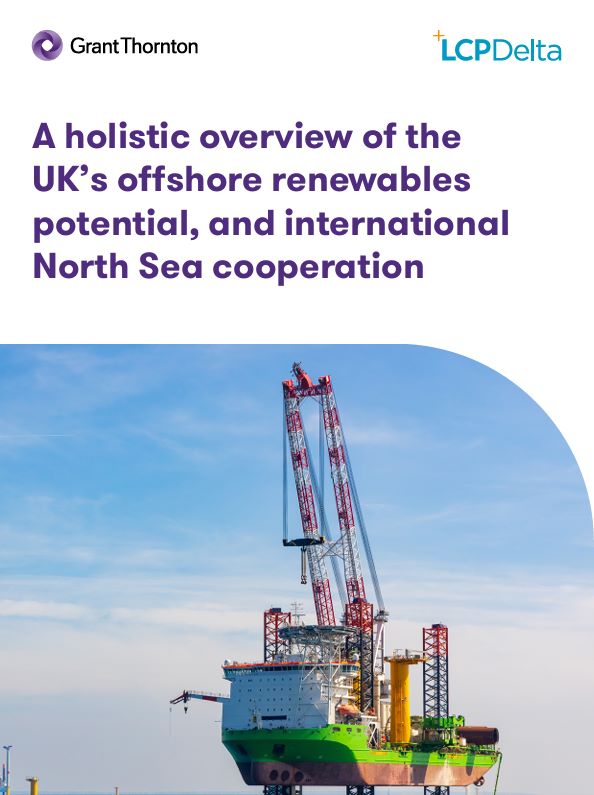
Download the report
A holistic overview of the UK’s offshore renewables potential, and international North Sea cooperation
Authors
-

Alasdair Grainger
I am a former senior civil servant and have 15 years’ energy and business policy expertise at the heart of the UK government.View Profile