Tou Ying tracker 2024: Chinese investments in the UK remain robust
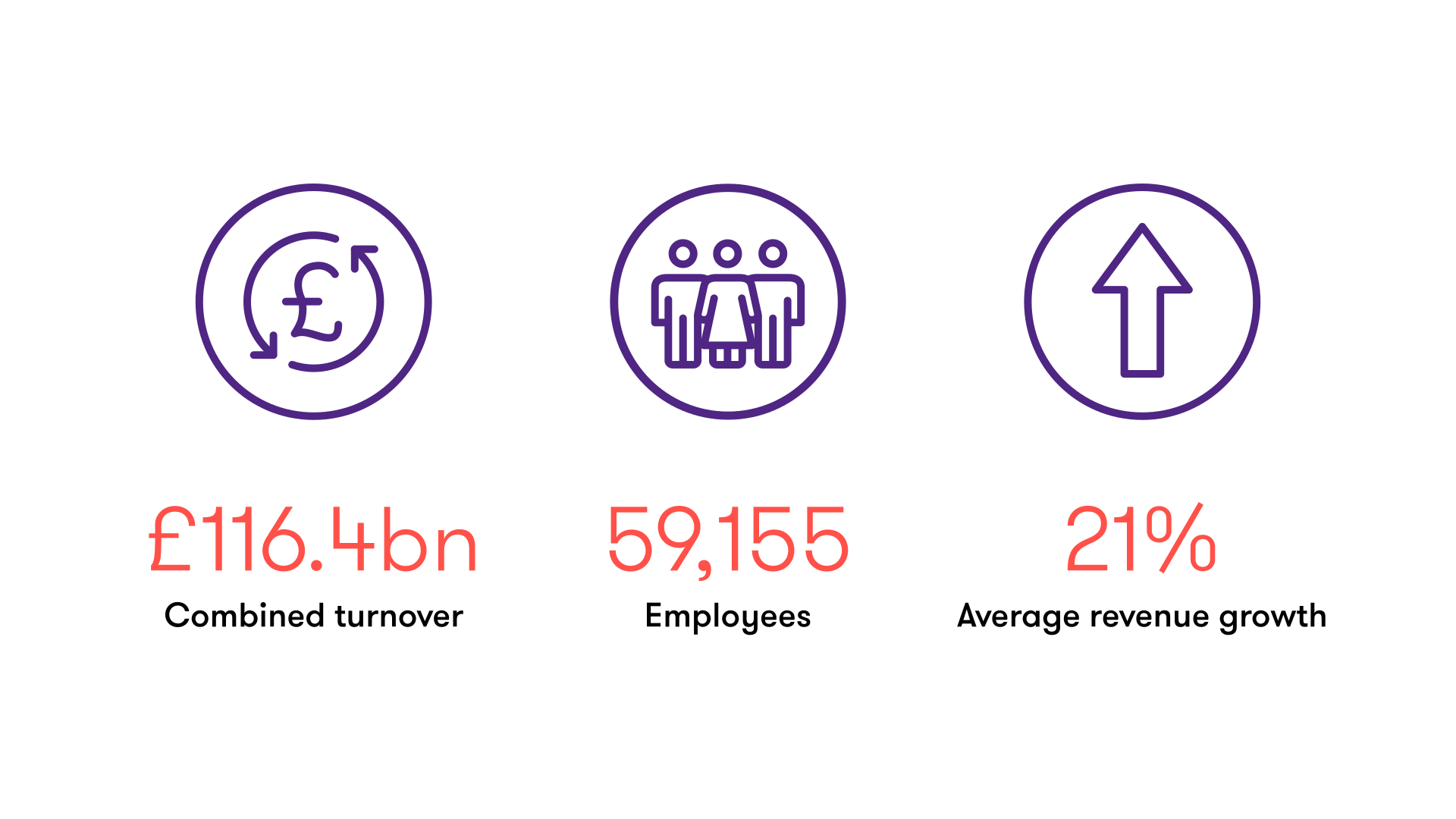
Our latest Tou Ying Tracker shows that the biggest Chinese-owned companies employ over 59,000 people in the UK and contributed total revenues of £116.4 billion to the country’s economy in 2023.
The tracker looks for all Chinese-owned companies operating in the UK that meet specific criteria:
- Have filed audited accounts with revenue of at least a thousand pounds at Companies House in at least one of the last two financial years to 30 September 2022 and 2023
- At least 50% owned by a Chinese corporate, investor, or national
970 companies met this criteria and we analysed data from these companies to create the Tou Ying insight, revealing distinct patterns of employment and growth.
We would also like to recognise the vast contribution to the UK economy of over 30,000 Chinese-owned companies, with around 100 representative offices or branch offices, which fall outside the criteria for inclusion in the insight, but still contributes much to UK commercial enterprise.
Showcasing the strength of Chinese investment in the UK
![icons showcasing the strength of Chinese investment in the UK]()
Number, revenues, and employees of China-owned UK businesses
Source: Grant Thornton UK analysis
Overall, Chinese companies contributed strongly to the economic rebound following the COVID-19 pandemic, with cumulative revenues increasing by c.21%. Over 200 of the companies in the survey have a turnover of £5 million or more.
The majority of the aggregate revenues are generated by energy trading businesses that are based in the UK, but engage in international trading. Specifically, in 2023, the largest four companies contributed £85 billion of the £116.4 billion total revenues.
A close look at Chinese M&A trends in the UK
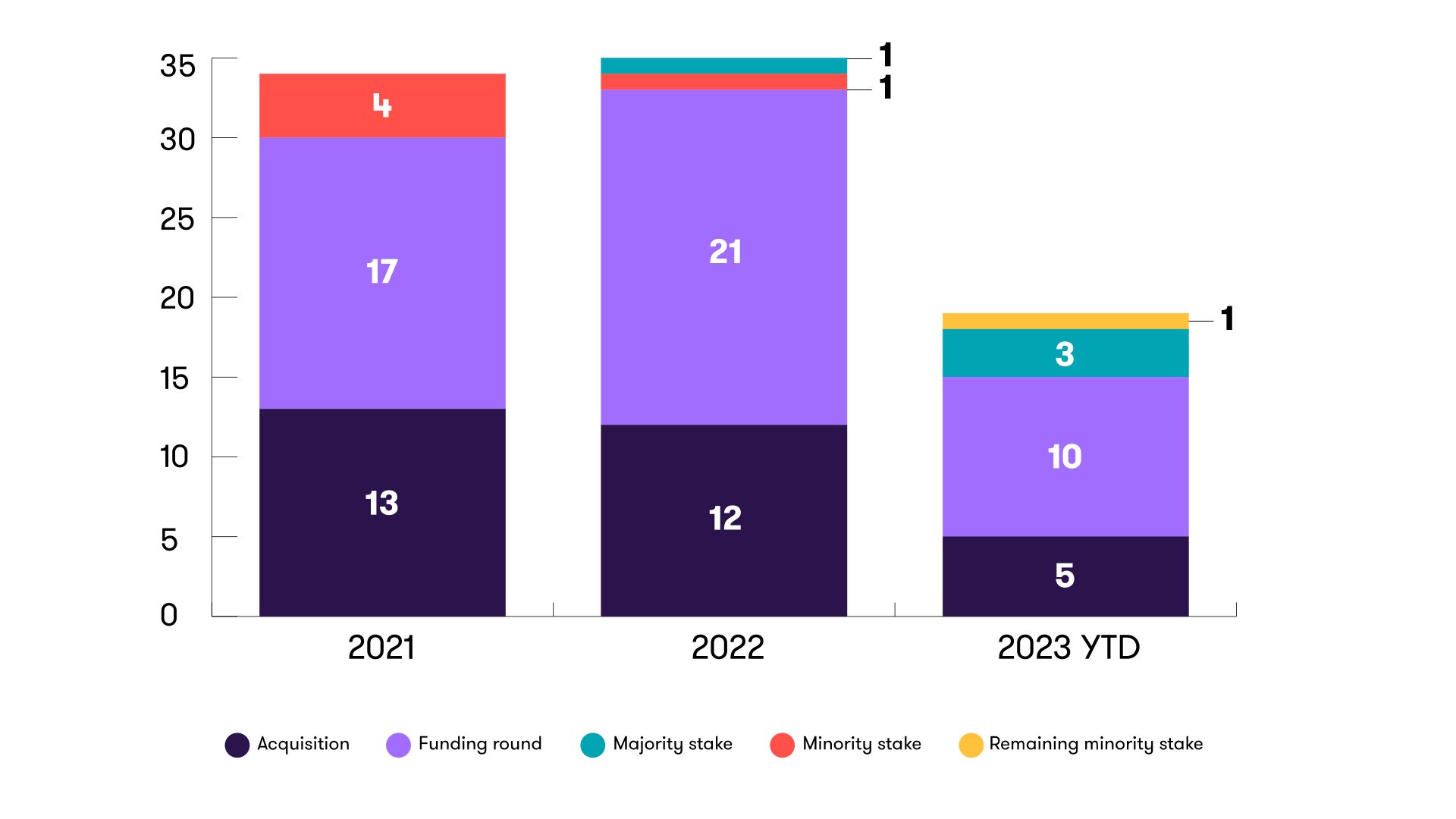
In 2023 funding capital deals remains the dominated way of Chinese investments into the UK, accounting for 53% of total deal volume (60% in 2022). However, the appetite for acquisitions decreased to five in 2023 (twelve in 2022).
Chinese technology conglomerate, Tencent Holdings, actively invested in four UK-based companies in 2023 (seven in 2022). Fintech turns to be the most popular sector in 2023, consisting of over £500 million aggregated transaction amounts.
Volumes of China-based M&A and funding rounds into UK businesses, 2021-2023
![Diagram depicting the volumes of China-based M&A and funding rounds into UK businesses, 2021-2023]()
Sources: Zephyr, Orbis, Mergermarket, Refinitiv, Nexis (excludes real-estate, JVs, partnerships, and greenfield investment)
Notable Chinese-UK deals between 2021 and 2023
GSR Ventures funds Fintern Ltd
The largest investment in 2023, at £500 million, involved Chinese Venure Captial GSR Ventures alongside other equity investors, contributing to a funding round for a London-based AI-driven Fintech, open banking solution company Abound, owned by Fintern Ltd.
Zhejiang Geely Holding Group Co Ltd increases equity in Aston Martin Lagonda Global Holdings PLC
In 2022, Zhejiang Geely Holding Group, China’s largest privately-owned automotive technology group, has increased its shareholding in Aston Martin Lagonda Global Holdings plc (Aston Martin) to c.17%, making itself the third largest shareholder ahead of Mercedes-Benz.
Tencent acquires Sumo Group
Tencent has announced its acquisition on Sumo Group, a London stock exchange listed Sheffield-based video game developer, at £909 million in 2021, marking it as the largest investment Tencent ever made in the UK.
|
Lower valuations and higher interest rates have created a funding gap for the commercial real estate sector.
Financing headwinds for commercial real estate
How we can help
Contending with market uncertainties nowadays, including rapid inflation, rising interest rates, and higher taxes, businesses are facing increased complexity of financial challenges. It's vital that Chinese businesses in the UK stay resilient and explore all options that are available.
You may face difficult choices, which need to be made quickly, when events don’t unfold as expected for your business, but we can help provide certainty and a clear course of action in respect of:
- Debt advisory and restructuring
- Equity valuation
- Option review for shareholders
- Creditor advisory
- Corporate restructuring
- Contingency-planning and administrations
Our solutions are tailored to your circumstances, your business, and your sector.
For more insight and guidance, contact Oliver Haunch or Ian Zhu.
![tracking-pixel]()