Meeting the UK’s decarbonisation challenge
Decarbonising the UK’s energy system and wider economy will require rapid electrification of heat, transport and industry, leading to a sharp rise in electricity demand. The National Energy System Operator’s (NESO) analysis suggests electricity demand could increase by 25-40% by the early 2030s and almost triple by 2050, reaching up to 700-785 TWh per year, compared with around 290 TWh today.
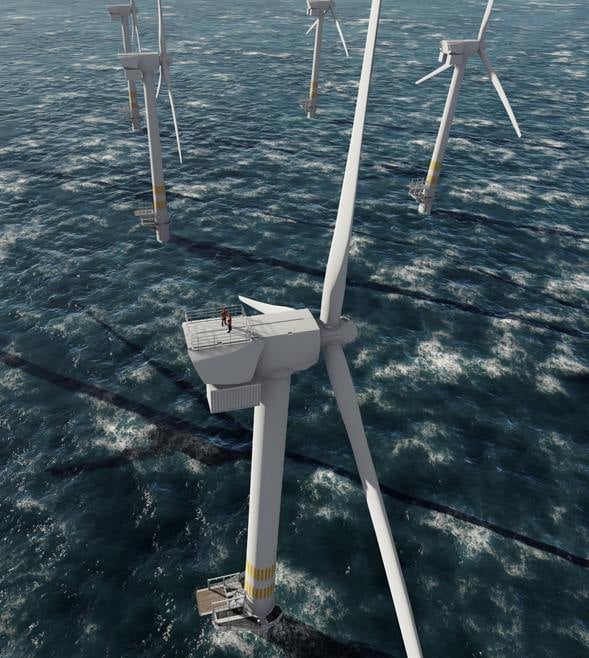
Offshore wind is central to meeting this demand, with government ambitions of 50 GW by 2030 and up to 100 GW by 2050. However, delivering this scale of generation in a cost-effective, timely and environmentally sustainable way requires a step change in how offshore transmission and interconnection infrastructure is planned and delivered.
Interconnection, and in particular, Multipurpose Interconnectors (MPIs) that combine offshore wind transmission with cross-border electricity trading, offer a key pathway to unlock system efficiencies, enhance security of supply and reduce impacts on coastal communities.
UK–EU cooperation on interconnection
Since 2019, the UK and EU have had high-level discussions regarding closer cooperation in energy markets and electricity trading following Brexit. These discussions have recognised the strategic role of interconnection and offshore hybrid assets in delivering shared decarbonisation and energy security objectives. But progress had stalled. This changed following the UK–EU Summit in May 2025, which committed both sides to further cooperation on electricity trading and system integration, in the context of the new Labour Government seeking a stronger, deeper relationship with the EU.
Grant Thornton coordinated an industry-led Wind and MPI Task Force
Against this backdrop, the Wind and MPI Task Force, chaired by National Grid and RenewableUK and coordinated by Grant Thornton, brought together offshore wind developers, transmission owners, investors and policymakers.
The Task Force was established to:
- identify the key regulatory, commercial and technical barriers to delivering MPIs in the UK; and
- develop practical, investable policy solutions.
After regular engagement throughout 2025 with policymakers from DESNZ, Ofgem and NESO, the Task Force concluded that a pilot MPI should be progressed immediately to avoid losing momentum, build delivery experience and inform the design of enduring regulatory frameworks.
Key findings
The Task Force found that while MPIs can deliver significant system, consumer and environmental benefits, current frameworks are not designed to support coordinated offshore wind and interconnection development. Without reform, MPIs risk remaining first‑of‑a‑kind concepts not bankable, scalable solutions.
Blockers and solutions
The Task Force, driven by Grant Thornton, identified a set of interrelated regulatory, commercial and delivery barriers that currently prevent the timely development of multipurpose interconnectors. Existing frameworks are largely designed around radial offshore wind connections and point-to-point interconnectors, creating uncertainty regarding the regulatory model for MPI assets, treatment of shared infrastructure, and recovery of anticipatory investment. In addition, current Contracts for Difference (CfDs) and market arrangements do not adequately protect offshore wind projects from price, volume and availability risks that arise when assets are connected through Offshore Bidding Zones (OBZs) or cross-border infrastructure. Inflexible grid connection processes, uncertainty over TNUoS charging and misalignment between seabed leasing, network planning and project development timelines further discourage coordination.
To address these barriers, the Task Force developed a package of practical, targeted solutions to make MPIs investable while protecting consumers and maintaining competitive tension.
Key recommendations include establishing a clear and bankable regulatory framework for MPI transmission assets; adapting CfD design to ensure offshore wind is not exposed to risks outside its control; and ensuring fair, transparent charging arrangements for shared infrastructure that reflect system-wide benefits.
The Task Force also recommends mechanisms to enable anticipatory investment, greater flexibility in grid connections and seabed leasing and the rapid delivery of a near-term MPI pilot to build experience and inform enduring policy design.
Building momentum: Hamburg Summit – January 2026
At the North Sea Summit in Hamburg on 26 January 2026, the UK and European partners signed the Hamburg Declaration, committing to the delivery of 100 GW of joint offshore wind projects across the North Sea through enhanced cross-border cooperation.
Crucially, the declaration explicitly supports the development of offshore wind hybrid assets and multipurpose interconnectors, including projects that connect wind farms directly to more than one country. At the summit, National Grid and TenneT Germany also announced GriffinLink, a proposed 2 GW UK-Germany MPI, signalling a clear shift from concept to delivery.
These commitments underline the growing political alignment behind MPIs as a core component of the UK and EU’s future integrated energy system.
The full Task Force report can be found here: unlocking-coordination-between-uk-offshore-wind-and-interconnectors-january-2026-joint-report.pdf
-
 Alasdair Grainger I am a former senior civil servant and have 15 years’ energy and business policy expertise at the heart of the UK government.
View Profile -
 Saloni Kapoor As an associate director in our net zero team, I work mainly with public sector organisations on low-carbon infrastructure projects.
View Profile